
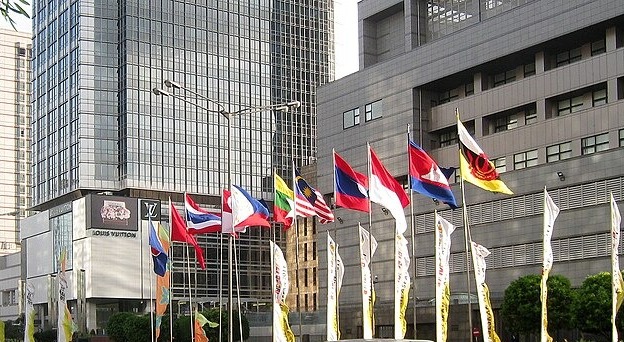
August 8, 1967, marks a historic date for the nations of Southeast Asia. Cooperation in various sectors—such as economics, social affairs, culture, technical matters, and education—as well as the promotion of regional peace and stability, formed the foundation for the establishment of the Association of Southeast Asian Nations (ASEAN).
In 2025, ASEAN celebrates its 58th anniversary, carrying the theme “Towards an Inclusive & Sustainable ASEAN Future” (Instagram @asean). This theme reflects Southeast Asia’s commitment to building a future that includes all segments of society, while ensuring growth that is socially, economically, and environmentally responsible and sustainable.
A brief history of ASEAN: ASEAN was founded through the Bangkok Declaration on August 8, 1967, by five countries: Indonesia, Malaysia, the Philippines, Singapore, and Thailand. The declaration was signed by five Foreign Ministers: Adam Malik (Indonesia), Narciso R. Ramos (Philippines), Tun Abdul Razak (Malaysia), S. Rajaratnam (Singapore), and Thanat Khoman (Thailand).
ASEAN’s membership has grown over time, currently totaling 11 countries. Brunei Darussalam joined on January 7, 1984; Vietnam on July 28, 1995; Laos and Myanmar on July 23, 1997; Cambodia on April 30, 1999; and most recently, Timor-Leste, which was officially recognized as the 11th member during the ASEAN Summit in Cambodia on November 11, 2022.
Postgraduate Program of Universitas Tarumanagara (PPs Untar) fully supports the spirit of integration and collaboration among ASEAN countries through education, research, and cross-disciplinary innovation—aiming to foster higher education with global competitiveness.
Let us work together to realize a peaceful, stable, and sustainable Southeast Asia.